
Why Bulk Buyers Are Replacing Traditional Cutting Boards with Stainless Steel Chopping Boards
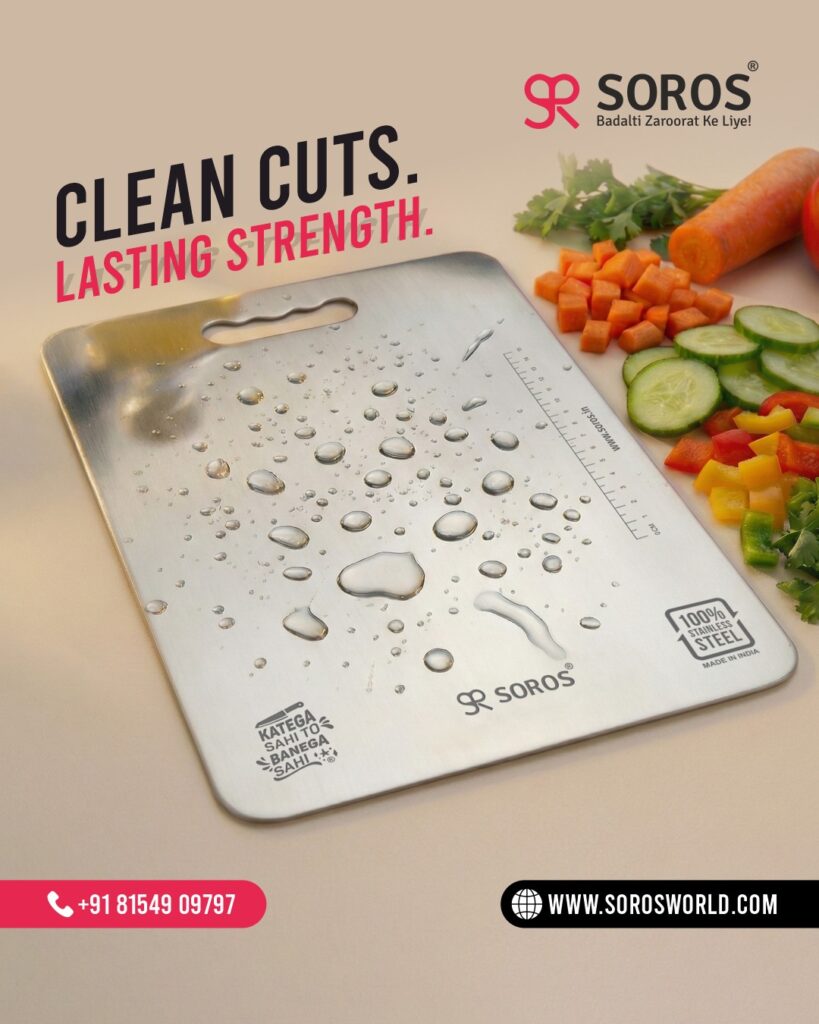
Why Bulk Buyers Are Replacing Traditional Cutting Boards with Stainless Steel Chopping Boards The global kitchenware industry is evolving rapidly as commercial kitchens, hospitality brands, modern retailers, and OEM buyers increasingly prioritize hygiene, durability, and long-term operational efficiency. One major shift currently transforming the market is the growing demand for stainless steel chopping boards across B2B and institutional procurement sectors. Traditional cutting boards made from conventional materials have served kitchens for decades. However, modern procurement teams are now moving toward stainless steel alternatives because of their superior durability, food safety advantages, and commercial-grade performance. Today, stainless steel chopping boards are widely used in: Hotels & restaurants Cloud kitchens Commercial food processing units Retail kitchenware brands Private label businesses E-commerce marketplaces Institutional kitchens Export distribution networks At Soros, we manufacture premium-quality stainless steel chopping boards designed for modern bulk supply, OEM manufacturing, and private label distribution requirements. The Changing Expectations of Modern Bulk Buyers Procurement buyers today are not only looking for affordable products. They are evaluating: Long-term durability Food safety compliance Maintenance requirements Product consistency Commercial usability Customer satisfaction Export suitability Retail scalability As kitchen environments become more hygiene-focused and operationally demanding, stainless steel chopping boards are emerging as a preferred solution for large-scale buyers. 1. Growing Focus on Food Hygiene Standards Food safety is now one of the biggest concerns across the hospitality and food service industry. Hotels, cloud kitchens, catering businesses, and restaurants require kitchen tools that support: Easy sanitization Bacteria resistance Non-porous surfaces Moisture resistance Low contamination risk Stainless steel chopping boards offer major advantages because food-grade stainless steel surfaces do not absorb: Food particles Moisture Oil Odors Bacteria This makes them highly suitable for commercial kitchen environments where hygiene standards are strictly monitored. 2. Longer Product Life Reduces Replacement Costs Bulk buyers always evaluate long-term product performance before finalizing suppliers. One of the key reasons stainless steel chopping boards are gaining popularity is their exceptional durability. Compared to traditional kitchen cutting surfaces, stainless steel boards are highly resistant to: Cracking Warping Moisture damage Corrosion Surface deformation For wholesalers, distributors, and institutional buyers, this translates into: Lower replacement frequency Reduced maintenance issues Improved customer satisfaction Long-term commercial value Professional procurement teams increasingly prefer products that minimize operational disruptions and after-sales complaints. 3. Commercial Kitchens Need Heavy-Duty Performance Modern food service environments involve continuous food preparation throughout the day. Commercial kitchens require products capable of handling: Heavy knife usage Continuous chopping operations Frequent washing cycles High-temperature cleaning Fast-paced kitchen workflows Stainless steel chopping boards are specifically preferred for these demanding conditions because of their structural strength and long-term stability. This is one of the main reasons many hotels, cloud kitchens, and catering operators are transitioning toward stainless steel kitchen preparation solutions. 4. Easy Cleaning Improves Kitchen Efficiency Operational efficiency is extremely important in commercial kitchens. Kitchen staff often work under strict timelines, especially during peak service hours. Products that require extensive maintenance or careful handling can slow down operations. Stainless steel chopping boards are preferred because they are: Easy to clean Quick to sanitize Dishwasher-safe Stain-resistant Low maintenance This allows kitchen teams to maintain faster workflow efficiency while supporting better hygiene management. 5. OEM & Private Label Demand is Increasing The rise of modern retail and e-commerce has created massive opportunities for private label kitchenware brands. Today, many distributors and online sellers are launching their own branded kitchen product lines. As a result, demand for OEM stainless steel chopping board manufacturing is growing rapidly. Private label buyers now look for manufacturers who can support: Custom branding Logo engraving Retail packaging Custom sizing Bulk production Consistent product quality At Soros, we support OEM and private label manufacturing solutions for modern kitchenware brands and distribution businesses. 6. Export Markets Prefer Durable Kitchenware Products International buyers increasingly prioritize: Durability Food safety Modern aesthetics Easy maintenance Commercial usability Because of these trends, export demand for stainless steel kitchen products has increased significantly. Export buyers prefer products that can withstand: Long shipping cycles Heavy commercial usage Retail handling Repeated cleaning High customer expectations India continues to strengthen its position as a major manufacturing hub for export-grade kitchenware and utility products. 7. Modern Retail Trends Are Driving Stainless Steel Product Demand Consumer buying preferences are evolving across both domestic and global markets. Modern buyers increasingly prefer: Minimalist kitchen products Professional kitchen aesthetics Long-lasting utility products Premium kitchen accessories Hygienic food preparation tools Because of this trend, retailers and distributors are expanding their stainless steel kitchenware product categories. This has created strong demand for manufacturers capable of supporting large-scale retail supply. 8. Bulk Buyers Prefer Multi-Category Manufacturing Partners Large procurement teams often prefer manufacturers who can supply multiple related product categories. This simplifies: Vendor management Container optimization Procurement coordination Packaging standardization Supply chain management Along with stainless steel chopping boards, Soros also manufactures: Wooden Chopping Boards Plastic Chopping Boards Kitchen Storage Solutions Kitchen Tableware Products Kitchen Utility Products Lunch Boxes Cloth Drying Stands Cloth Hangers Mobile Stands This helps distributors and retailers streamline sourcing through a reliable manufacturing partner. 9. Consistent Quality Matters More Than Low Pricing Experienced buyers understand that inconsistent product quality creates: Customer complaints Returns and replacements Negative reviews Brand reputation damage Operational losses That is why modern procurement teams increasingly prioritize: Manufacturing standards Quality control systems Reliable production processes Structured packaging Long-term supplier relationships Professional manufacturers invest heavily in maintaining product consistency across every production cycle. 10. Why Stainless Steel Chopping Boards Are a Long-Term Growth Category The kitchenware market is continuously evolving toward products that combine: Functionality Hygiene Durability Professional aesthetics Low maintenance Stainless steel chopping boards align strongly with these long-term market trends. As hospitality businesses, cloud kitchens, modern retailers, and private label brands continue to expand, the demand for commercial-grade kitchen preparation products is expected to grow steadily. Why Buyers Choose Soros for Stainless Steel Chopping Board Manufacturing Soros is a trusted Indian manufacturer of modern home and kitchen utility products designed for bulk supply, OEM production, and private label partnerships. Our manufacturing capabilities include: Food-grade stainless
How to Choose the Right Stainless Steel Chopping Board Manufacturer
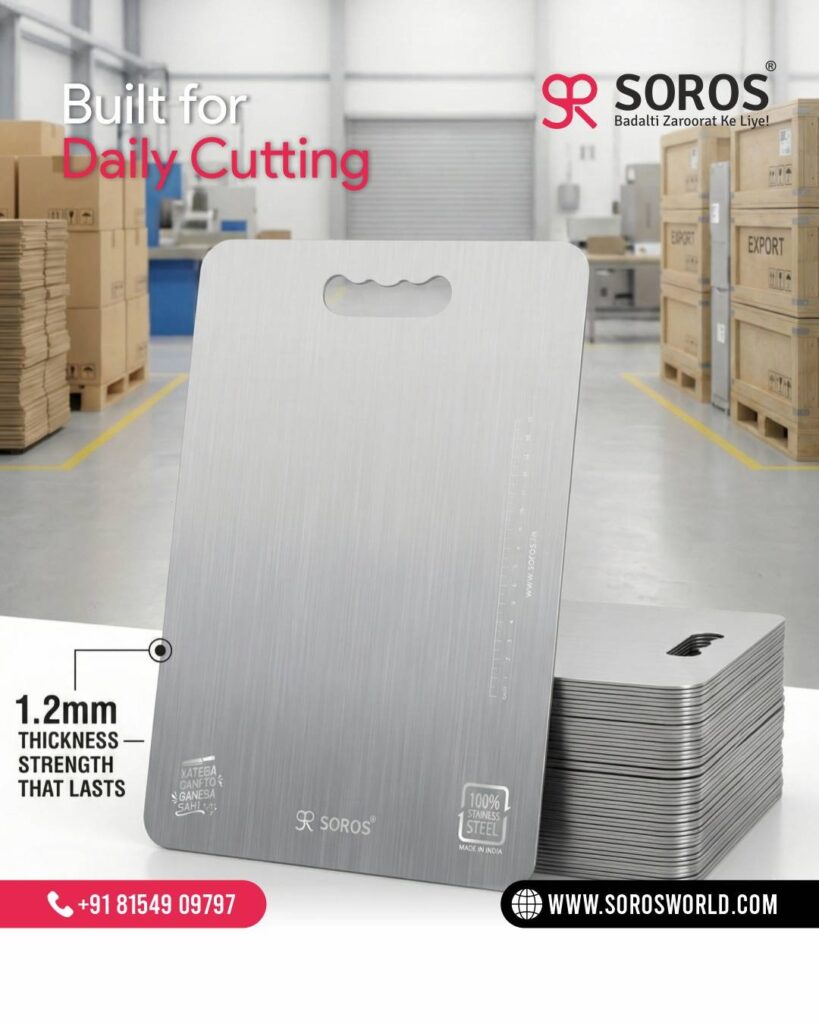
How to Choose the Right Stainless Steel Chopping Board Manufacturer in India for OEM & Bulk Supply The global demand for durable, hygienic, and food-safe kitchen products continues to grow rapidly across retail, hospitality, e-commerce, and private label markets. Among these products, stainless steel chopping boards have become increasingly popular due to their durability, hygiene standards, and long-term commercial usability. For wholesalers, importers, distributors, retail chains, OEM buyers, and private label brands, choosing the right stainless steel chopping board manufacturer is critical for ensuring product quality, supply consistency, and long-term business growth. India has emerged as one of the leading manufacturing hubs for kitchenware and stainless steel utility products. However, not every supplier can meet the requirements of modern B2B buyers. In this guide, we explain the most important factors bulk buyers should evaluate before selecting a stainless steel chopping board manufacturer in India. Why Stainless Steel Chopping Boards Are Growing in Demand Modern kitchens now prioritize: Food hygiene Long-term durability Easy cleaning Commercial-grade performance Rust-resistant kitchen tools Because of these advantages, stainless steel chopping boards are increasingly used across: Hotels & restaurants Cloud kitchens Commercial food preparation units Retail kitchenware brands E-commerce marketplaces Modern trade networks Export markets As a result, buyers are actively looking for reliable Indian manufacturers capable of supporting large-scale supply and OEM production. 1. Verify Food-Grade Stainless Steel Quality The first factor every procurement buyer should verify is the quality of stainless steel used during manufacturing. Professional manufacturers typically use: SS 304 Stainless Steel SS 202 Stainless Steel Food-grade steel ensures: Safe food preparation Rust resistance Corrosion protection Long-term durability Commercial kitchen suitability At Soros, our stainless steel chopping boards are manufactured using food-grade stainless steel designed for bulk commercial applications and export-quality performance. 2. Evaluate Manufacturing Capacity One of the biggest problems bulk buyers face is inconsistent supply capacity. Before finalizing a supplier, buyers should verify: Monthly production capacity Manufacturing infrastructure Production lead times Workforce capabilities Packaging systems Quality control process Manufacturers with structured production systems are more capable of handling: OEM manufacturing Private label projects Large distributor orders Export shipments Marketplace supply requirements Soros supports scalable B2B production with dedicated manufacturing systems designed for consistent supply and long-term buyer partnerships. 3. Check OEM & Private Label Capabilities Many modern buyers are not only looking for products — they are building brands. That is why OEM and private label manufacturing support has become essential. A reliable chopping board manufacturer should offer: Custom branding Laser logo engraving Custom dimensions Retail-ready packaging Barcode & labeling support Export packaging customization Private label buyers should also evaluate whether the supplier can maintain consistent product quality across multiple production batches. At Soros Stainless Steel Chopping Boards, we support OEM and private label manufacturing for distributors, retailers, and export buyers across multiple markets. 4. Understand Product Design & Market Suitability Different markets require different chopping board specifications. For example: Retail markets prefer lightweight & compact designs Commercial kitchens require heavy-duty boards Export buyers may require customized dimensions E-commerce brands prioritize attractive packaging A strong manufacturer should understand the practical application requirements of different industries. Common applications include: Hotels Restaurants Catering kitchens Cloud kitchens Retail kitchenware Modern trade supply Online marketplaces 5. Evaluate Product Finishing & Edge Safety Product finishing directly impacts: User safety Product appearance Retail presentation Long-term durability Bulk buyers should inspect: Surface finishing quality Rounded edge precision Thickness consistency Scratch resistance Anti-slip functionality Poor finishing often results in customer complaints, product returns, and brand reputation issues. Professional manufacturers follow structured finishing and inspection processes before dispatch. 6. Ask About Packaging Standards Packaging is extremely important for wholesalers, distributors, exporters, and e-commerce sellers. Strong packaging helps: Prevent transit damage Improve retail presentation Support export shipping Reduce return rates Protect product finishing Reliable manufacturers should provide: Brown box packaging Retail packaging Export carton packaging Customized branding options Barcode labeling support At Soros, we support packaging solutions aligned with wholesale, retail, and export distribution requirements. 7. Verify Quality Control Systems Consistency is one of the most important factors in B2B manufacturing. Before selecting a manufacturer, buyers should understand: Inspection process Material verification Surface quality testing Packaging inspection Production quality checkpoints Reliable quality control systems reduce: Defective inventory Product complaints Brand damage Replacement costs Soros follows strict quality-focused production standards across all kitchen and home utility product categories. 8. Consider Export Readiness If you are sourcing products for international distribution, export readiness becomes a major selection factor. Professional export-oriented manufacturers should provide: Export-compliant packaging Bulk documentation support Container shipment coordination Product consistency Global supply capability India continues to grow as a global sourcing destination for kitchenware and utility products because of its manufacturing strength and cost-effective production ecosystem. 9. Review Product Range Diversification Many distributors and wholesalers prefer working with suppliers offering multiple related kitchen product categories. This simplifies: Procurement management Logistics coordination Container optimization Vendor relationships Bulk sourcing operations In addition to stainless steel chopping boards, Soros also manufactures: Wooden Chopping Boards Plastic Chopping Boards Kitchen Storage Solutions Lunch Boxes Kitchen Tableware Products Kitchen Utility Products Cloth Drying Stands Cloth Hangers This helps buyers source multiple product categories through a single manufacturing partner. 10. Build Long-Term Manufacturing Partnerships Successful B2B sourcing is not only about pricing. Long-term supplier relationships provide: Supply reliability Stable product quality Faster production planning Better customization support Improved communication Business scalability Manufacturers who understand buyer expectations become long-term growth partners rather than short-term suppliers. Why Buyers Choose Soros for Stainless Steel Chopping Boards Soros is a growing manufacturer of home and kitchen utility products based in India, serving wholesalers, distributors, OEM buyers, exporters, and retail partners. Our manufacturing strengths include: Food-grade stainless steel production OEM & private label manufacturing Bulk supply capability Consistent production standards Export-focused supply support Commercial-grade product durability Structured quality control systems We continue to support businesses looking for scalable, long-term kitchenware manufacturing partnerships. Conclusion Selecting the right stainless steel chopping board manufacturer in India requires more than comparing product prices. Professional buyers should evaluate: Material quality Manufacturing capability OEM support Quality control
OEM Stainless Steel Chopping Board Manufacturing
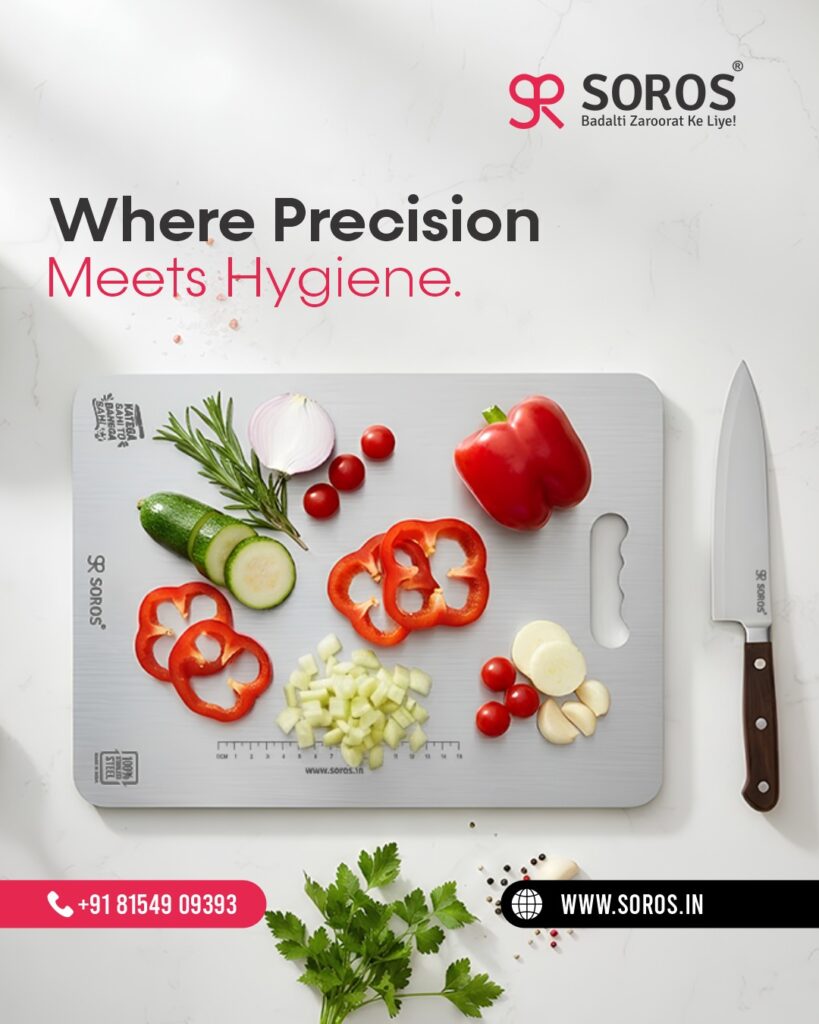
OEM Stainless Steel Chopping Board Manufacturing in India: What Private Label Brands Should Know Before Sourcing The global kitchenware industry is witnessing rapid growth as modern consumers increasingly prioritize hygiene, durability, and premium kitchen organization products. This shift has created major opportunities for retailers, distributors, e-commerce sellers, and entrepreneurs launching their own private label kitchenware brands. Among the fastest-growing product categories in the kitchen utility segment are stainless steel chopping boards. Their commercial durability, food-safe properties, and modern appearance have made them highly attractive across domestic and international markets. As a result, many businesses are now actively searching for reliable OEM stainless steel chopping board manufacturers in India capable of supporting bulk production and private label supply. However, selecting the right OEM manufacturing partner involves much more than comparing prices. Private label brands must carefully evaluate: Manufacturing quality Production capability OEM customization support Packaging standards Supply consistency Export readiness Long-term scalability In this guide, we explain everything private label brands should understand before sourcing stainless steel chopping boards from India. Why Private Label Kitchenware Brands Are Growing Rapidly Over the past few years, e-commerce growth and changing consumer behavior have transformed the kitchenware market. Today, many businesses are launching their own branded kitchen utility products through: Amazon Flipkart Modern retail stores D2C websites International marketplaces Wholesale distribution networks Private label manufacturing allows brands to: Create unique product identity Build long-term customer loyalty Increase profit margins Control packaging and branding Expand product categories efficiently Kitchen preparation products like chopping boards are especially popular because they combine: Daily usability Strong repeat demand Wide market appeal Practical functionality Why Stainless Steel Chopping Boards Are a High-Growth Product Category Modern buyers increasingly prefer kitchen products that offer: Food safety Easy maintenance Durability Professional appearance Long-term usability Because of these trends, stainless steel chopping boards are becoming a preferred alternative in both residential and commercial kitchens. They are widely used across: Hotels & restaurants Cloud kitchens Meal preparation businesses Modern home kitchens Retail kitchenware collections Professional food preparation environments This growing demand makes stainless steel chopping boards an attractive category for private label brands and wholesale distributors. Why India Has Become a Preferred OEM Manufacturing Destination India has emerged as one of the world’s fastest-growing manufacturing hubs for kitchenware and home utility products. Global buyers increasingly source from India because of: Competitive manufacturing costs Skilled workforce availability Strong stainless steel production ecosystem Flexible OEM manufacturing support Growing export infrastructure Scalable production capabilities Indian manufacturers now support buyers across: North America Europe Middle East Asia-Pacific markets African distribution markets Professional Indian manufacturers are capable of handling both small and large private label kitchenware projects. What Private Label Buyers Should Evaluate Before Choosing an OEM Manufacturer 1. Food-Grade Material Standards The quality of stainless steel directly impacts product durability, hygiene performance, and long-term customer satisfaction. Reliable manufacturers generally use: SS 304 stainless steel SS 202 stainless steel Food-grade steel ensures: Rust resistance Corrosion protection Safe food preparation Long-term structural durability Commercial-grade performance Private label buyers should always verify the grade and consistency of raw materials used during production. 2. Manufacturing Infrastructure & Production Capacity Many suppliers operate as trading businesses instead of actual manufacturers. Private label brands should verify whether the supplier has: In-house production facilities Structured manufacturing systems Dedicated workforce Quality inspection processes Packaging infrastructure Bulk production capability Strong production infrastructure is essential for maintaining: Consistent quality Stable lead times Scalable production Repeat order reliability At Soros, we manufacture stainless steel chopping boards using structured production systems designed for OEM, private label, and bulk commercial supply. 3. OEM Branding & Customization Support Modern private label businesses require products that align with their unique brand positioning. A professional OEM manufacturer should support: Custom logo engraving Custom sizing Packaging customization Private label branding Barcode & labeling support Retail-ready presentation Customization capability is especially important for: E-commerce brands Retail chains Export distributors Hospitality procurement brands Manufacturers capable of supporting multiple customization requirements become long-term growth partners for scaling businesses. 4. Product Finishing Quality Finishing quality directly affects: Retail appearance User experience Safety standards Customer reviews Brand reputation Private label buyers should carefully inspect: Surface smoothness Edge finishing Thickness consistency Structural balance Product stability Poor finishing often leads to: Product complaints Returns Negative ratings Brand reputation damage Reliable manufacturers follow structured inspection systems to ensure consistent product finishing across every batch. 5. Packaging Standards for Retail & Export Markets Packaging is one of the most important elements in private label product presentation. Professional packaging helps: Improve shelf appeal Protect products during transit Support export shipping Strengthen brand identity Reduce damage rates OEM buyers should verify whether the manufacturer supports: Brown box packaging Printed retail boxes Custom inserts Barcode integration Export carton packaging Bulk shipment optimization Soros supports packaging solutions designed for modern retail, wholesale, and export distribution channels. 6. Supply Chain Reliability One of the biggest challenges for growing private label brands is inconsistent supply. Late deliveries or unstable production schedules can affect: Marketplace rankings Inventory planning Retail supply commitments Customer satisfaction Business growth Before finalizing an OEM supplier, buyers should evaluate: Production lead times Monthly output capability Inventory management systems Bulk dispatch capability Communication responsiveness Long-term reliability is often more valuable than short-term low pricing. 7. Product Diversification Capability Most private label kitchenware brands eventually expand into multiple product categories. Working with a manufacturer capable of supplying multiple kitchen utility products simplifies: Vendor management Procurement operations Container optimization Brand consistency Packaging coordination Along with stainless steel chopping boards, Soros also manufactures: Wooden Chopping Boards Plastic Chopping Boards Kitchen Storage Solutions Kitchen Tableware Products Kitchen Utility Products Lunch Boxes Cloth Drying Stands Cloth Hangers Mobile Stands This allows buyers to scale their product portfolio through a single manufacturing ecosystem. Why Long-Term OEM Partnerships Matter Successful private label businesses are built on stable manufacturing partnerships. Strong OEM relationships help brands improve: Product consistency Inventory planning Market expansion Operational efficiency Product innovation Brand reputation Manufacturers who understand long-term business growth provide significantly greater value than short-term transactional suppliers. Why Buyers Choose
Is a Stainless Steel Chopping Board Right for Your Kitchen?
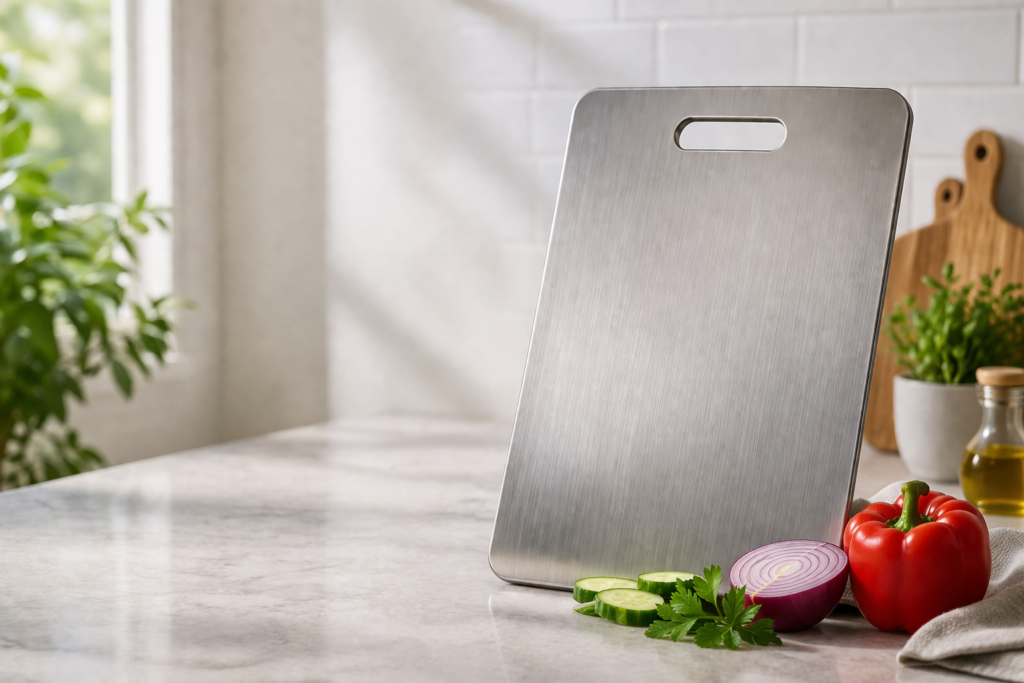
Every Indian kitchen has one thing in common a chopping board that has seen better days. Stained, cracked, smelling faintly of yesterday’s onions, sitting somewhere between the knife stand and the gas stove. Most of us replace it eventually, but we replace it with the same kind. Wooden or plastic. Because that is what we know. But something has changed in the last few years. More and more Indian home cooks, hotel kitchens, and professional chefs are switching to a stainless steel chopping board and for good reason. This article walks you through everything you need to know before making that decision, so you can cook smarter and keep your kitchen genuinely clean. Why Your Old Chopping Board Is a Hidden Problem Most people do not think about their chopping board until it starts falling apart. But your chopping board is one of the most bacteria-prone surfaces in your entire kitchen. Studies have shown that a used wooden chopping board can harbour more bacteria per square centimetre than a toilet seat. That is not a pleasant thought when you are slicing tomatoes for your family’s lunch. Wooden chopping boards absorb moisture every single time you wash them. That moisture seeps into the tiny cuts left by your knife, and bacteria settle in those grooves. You can scrub them as hard as you like you cannot reach what is trapped inside the wood fibres. Plastic boards have a similar problem over time. Once the surface gets heavily scored by knife marks, bacteria find a permanent home in those crevices. This is exactly why the stainless steel chopping board is gaining serious attention in Indian kitchens. Steel is non-porous. It does not absorb moisture. It does not develop invisible grooves that trap food particles. When you wash it, you are actually cleaning the entire surface not just the top layer. What Makes Steel the Hygienic Choice The surface of a stainless steel chopping board is entirely non-porous. This means no liquid, juice, or bacteria can seep into the material itself. Whether you are cutting raw chicken, chopping onions, or slicing a ripe watermelon, the board does not hold on to any residue once washed properly. For Indian cooking specifically, this matters a great deal. Our kitchens deal with strong spices, raw meat, fish, turmeric, and highly acidic ingredients like tamarind and tomatoes on a daily basis. Wooden boards stain easily with turmeric and absorb the smell of fish or garlic within weeks. A steel board handles all of these without any permanent staining or odour buildup. Soros stainless steel chopping boards are made from food-grade SS202 and SS304 steel the same grades used in commercial kitchens and food processing units. This is not decorative steel. It is certified food-safe material that is rust-resistant, non-toxic, and built for serious daily use. The Chapati Roti Advantage Nobody Talks About Here is something specific to Indian kitchens that most articles miss entirely. The single biggest reason why stainless steel chopping boards have taken off in India is not because of cutting. It is because of kneading. Millions of Indian households knead dough for chapati, roti, and paratha directly on the kitchen countertop. While convenient, this creates hygiene concerns because countertops collect dust, cleaning product residues, and regular kitchen grime throughout the day. A large stainless steel chopping board solves this perfectly. It gives you a clean, stable, dedicated surface for kneading dough that is easy to wash before and after use. The smooth steel surface actually makes dough rolling easier, and the weight of the board keeps it from sliding around. Many Soros customers say this is the single most-used feature of their steel board — not the cutting, but the kneading. Is It Hard on Your Knives? This is the most common concern people have, and it deserves an honest answer. Yes, steel is harder than wood or plastic, which means your knife edge will dull slightly faster compared to a soft wooden board. That is a genuine trade-off. However, there are two things worth knowing. First, if you keep your knives regularly sharpened as any serious cook should — this dulling is manageable and not dramatic. Second, the Soros steel chopping board uses a brushed matte surface finish rather than a polished mirror finish. Polished steel is brutal on knife edges. A properly brushed matte surface is significantly gentler. The practical solution many Soros customers use is a two-board system. The stainless steel chopping board for raw meat, fish, roti dough, and anything that needs serious hygiene. A wooden chopping board for delicate vegetables and herbs where knife preservation matters more. This is the approach used in most professional kitchens, and it works extremely well. Durability That Makes Financial Sense A quality wooden chopping board typically lasts one to three years with regular use before warping, cracking, or developing such deep knife marks that it becomes genuinely unhygienic. Plastic boards have an even shorter useful life. A good stainless steel chopping board, maintained properly, can last ten to fifteen years or more. When you look at the cost over time, a Soros stainless steel chopping board is not just a purchase it is an investment that pays for itself many times over. You are not replacing it every year. You are not scrubbing it with special treatments or oiling it monthly like a wooden board requires. You wash it, dry it, and it is ready for the next meal. How to Choose the Right Size Soros offers stainless steel chopping boards in multiple sizes. For a standard Indian household of three to four people cooking one to two meals daily, a medium board (approximately 36 x 25 cm) works well for most cutting tasks and is easy to store. If you also plan to use it for kneading roti dough, go larger – a 42 x 30 cm board gives you the space you need comfortably. For hotel kitchens, restaurants, or cloud kitchens, the commercial grade Soros boards with thicker gauge steel
Do you know Stainless Steel Chopping Board is Best Choice for Commercial Kitchen
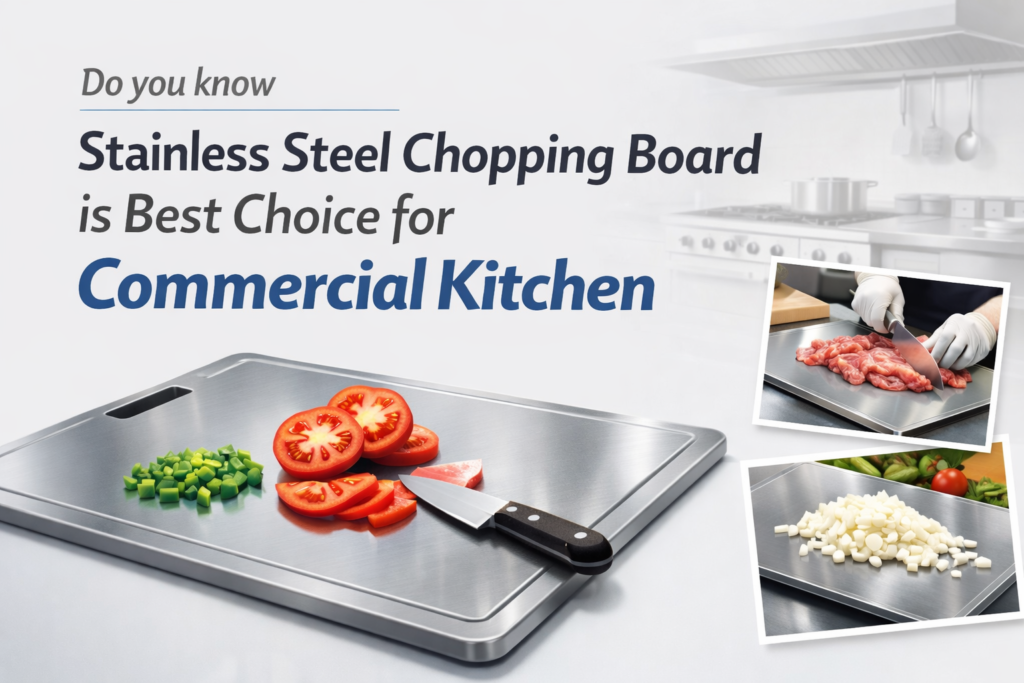
Walk into any professional kitchen in India, a hotel, a restaurant, a cloud kitchen, or a large catering unit and you will almost always find one thing in common. Stainless steel. Stainless steel counters, stainless steel utensils, stainless steel storage. And increasingly, stainless steel chopping boards. The shift toward stainless steel chopping boards in Indian commercial kitchens is not a trend. It is a practical decision driven by hygiene requirements, operational durability, and long-term cost efficiency. If you are a hotel procurement manager, a restaurant chain owner, an e-commerce seller sourcing kitchen products, or a business looking for OEM chopping board manufacturing in India, this guide will explain exactly why stainless steel is the right material and what to look for when buying or sourcing in bulk. What Makes Stainless Steel the Right Material for a Chopping Board The chopping board is one of the most used and most abused tools in any kitchen. It takes the impact of repeated cutting, gets exposed to raw meat, vegetables, and acidic foods, gets washed dozens of times a day, and needs to remain hygienic throughout. The material it is made from determines whether it survives all of this for years or becomes a liability within months. Stainless steel handles all of these demands better than any other material available in the Indian market today. It is non-porous. Unlike wooden chopping boards that have natural grain patterns and microscopic pores where bacteria can hide, a stainless steel chopping board has a smooth, non-porous surface. Bacteria, food residue, and odours do not penetrate the surface. A simple wash removes contamination completely, making it the most hygienic option for food contact surfaces in commercial kitchens. It does not absorb moisture. Wooden boards soak up moisture from repeated washing and food contact, causing them to warp, crack, and split over time. Plastic boards develop deep cut grooves from knife use where moisture and bacteria collect. Stainless steel absorbs nothing, maintains its form, and does not deteriorate from moisture exposure. It is rust-resistant when made correctly. A stainless steel chopping board manufactured from food-grade 304 or 202 steel grade offers strong natural rust resistance even in humid kitchen environments. This is critical in Indian kitchens where humidity, steam, and frequent water contact are part of daily operation. It lasts significantly longer. In a high-volume commercial kitchen environment, a quality stainless steel chopping board will outlast wooden and plastic options by years, reducing replacement frequency, procurement cost, and kitchen downtime. Food-Grade 304 vs 202 Stainless Steel – What Is the Difference If you are sourcing stainless steel chopping boards in bulk for commercial or export purposes, understanding the difference between steel grades matters. 304 Stainless Steel is the gold standard for food contact surfaces. It contains a higher chromium and nickel content, which gives it superior corrosion resistance, strength, and food safety compliance. 304-grade stainless steel chopping boards are ideal for hotels, restaurants, export markets, and institutional kitchens where the highest hygiene standards are required. Most international buyers and large hospitality chains specifically require 304 grade for their kitchen procurement. 202 Stainless Steel offers good durability and rust resistance at a more economical price point. It is suitable for retail, general commercial use, and markets where the premium properties of 304 are not specifically mandated. For domestic Indian commercial kitchens and retail supply chains, 202-grade stainless steel chopping boards offer strong performance at a competitive price. Soros manufactures stainless steel chopping boards in both 304 and 202 grades, allowing B2B buyers, OEM partners, and export clients to choose the specification that matches their market requirements and budget. Who Should Use a Stainless Steel Chopping Board Stainless steel chopping boards are not exclusively for five-star hotel kitchens. Their application spans a wide range of commercial and institutional environments across India and global markets. Hotels and Resorts rely on stainless steel chopping boards for their combination of hygiene compliance, durability under continuous use, and professional kitchen aesthetics. Large hotel chains procure in bulk and require consistent quality across multiple properties, making manufacturer-direct supply the preferred sourcing method. Restaurants, QSRs, and Cloud Kitchens deal with extremely high-frequency food preparation across multiple shifts. A stainless steel chopping board that can withstand continuous cutting, repeated sanitisation, and daily commercial use without degrading is essential for kitchen efficiency and food safety compliance. Retail Chains and Supermarkets stock stainless steel chopping boards as premium kitchen essentials for home and professional use. Retail buyers look for consistent product quality, retail-ready packaging, and reliable repeat supply from manufacturers. Ecommerce and Quick Commerce Sellers require packaging-ready stainless steel chopping boards that photograph well, arrive without damage, and maintain consistent quality across bulk inventory orders. This is a fast-growing channel in India with strong demand for quality kitchen products. Dealers, Distributors, and Wholesalers supplying to trade networks across India need a manufacturing partner who can deliver consistent product quality, competitive wholesale pricing, and reliable repeat supply on schedule. Exporters and International Trading Partners sourcing stainless steel chopping boards from India need export-grade quality, proper documentation, and a manufacturer with proven international supply capability. What to Look for When Buying Stainless Steel Chopping Boards in Bulk Whether you are a hotel procurement team, a kitchenware distributor, an e-commerce seller, or an OEM buyer here is what to evaluate before committing to a bulk order. Steel Grade and Food Safety Compliance: Always confirm the steel grade. For export markets and high-standard commercial kitchens, insist on 304 grade. For general commercial and retail supply in India, 202 grade offers strong performance. Ask the manufacturer for material test certificates if required. Surface Finish and Edge Quality A good stainless steel chopping board should have a smooth, uniform surface finish with no rough edges, sharp corners, or weld marks that could harbour bacteria or cause injury. Check the edge finishing and corner treatment on samples before approving bulk production. Board Thickness and Weight Capacity: Thicker boards offer more durability and stability during heavy cutting. For commercial kitchen use, look for boards with adequate
From Prep to Plate: How the Right Chopping Board Enhances Your Cooking
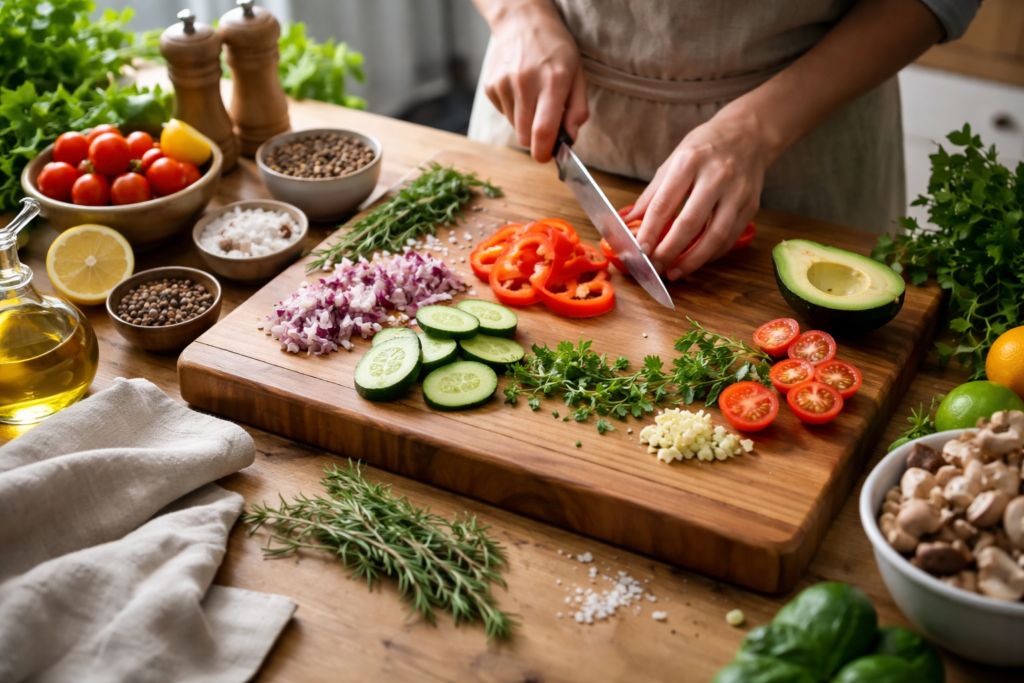
In every kitchen, from home setups to professional workspaces, preparation is where great cooking truly begins. While knives, cookware, and appliances often get the spotlight, one essential tool quietly shapes the entire cooking experience the chopping board. It directly affects hygiene, safety, knife performance, and even how enjoyable food preparation feels. Choosing the right chopping board is not just about convenience; it is about building a reliable foundation for better cooking. The right surface supports precision, maintains cleanliness, and stands up to daily wear. Whether you are a home cook or a professional chef, understanding chopping board materials, construction, and usage can significantly elevate your kitchen efficiency. Why the Chopping Board Matters More Than You Think Every ingredient touches the chopping board first. Vegetables, fruits, meats, and herbs all come into direct contact with its surface. A poor-quality board can trap bacteria, dull knives quickly, and become unsafe over time. On the other hand, a well-made chopping board improves workflow, reduces contamination risks, and lasts for years. Modern kitchens demand tools that combine durability, hygiene, and aesthetics. This is where material selection plays a critical role, especially when comparing wooden and metal chopping boards. Stainless Steel Chopping Boards: Strength Meets Hygiene For kitchens that prioritize hygiene and durability, stainless steel chopping boards have become a preferred option. A Food-Grade Stainless Steel Cutting Board offers a non-porous surface that does not absorb moisture, odors, or bacteria. This makes it particularly suitable for handling raw meat, seafood, and high-risk ingredients. Another major advantage is maintenance. A Rust-Proof Chopping Board for Kitchen environments ensures long-term performance even with frequent washing and exposure to moisture. Unlike traditional materials that may crack or warp, stainless steel maintains its shape and integrity. Professional kitchens often rely on suppliers who understand food safety standards. Working with a Hygienic Stainless Steel Cutting Board Supplier ensures compliance with strict hygiene requirements while offering consistent quality and finish. For demanding environments, a Durable Metal Chopping Board for Chefs delivers exceptional resistance to impact, heat, and repeated use. These boards are designed for high-volume food preparation where performance and sanitation cannot be compromised. In India, many kitchens now prefer 304 Stainless Steel Chopping Board India variants due to their corrosion resistance, strength, and food-safe properties. This grade is widely trusted in commercial and residential kitchens alike. Wooden Chopping Boards: Tradition, Functionality, and Knife Care Wooden chopping boards continue to be valued for their natural appeal and knife-friendly surface. A reliable Premium Wooden Cutting Board Supplier focuses on craftsmanship, material sourcing, and food safety, ensuring boards are both functional and visually refined. Among wooden options, Handcrafted Teak & Acacia Chopping Boards stand out for their density and durability. Teak naturally contains oils that resist moisture and bacterial growth, while acacia offers strength with striking grain patterns. Together, they create boards that are long-lasting and suitable for daily use. Sustainability has become a major consideration in modern kitchens. Choosing an Eco-Friendly Wooden Chopping Board India option supports responsible sourcing while delivering a biodegradable and renewable kitchen tool. When it comes to food safety, a Food-Grade Wooden Cutting Board for Kitchen use is treated and finished to prevent contamination while maintaining the integrity of the wood. Properly sealed wooden boards are safe, reliable, and widely used across the world. One of the biggest advantages of wood is knife preservation. A Knife-Friendly Wooden Chopping Board absorbs impact gently, helping blades retain their sharp edge for longer compared to harder surfaces. Choosing Between Stainless Steel and Wooden Boards The decision between stainless steel and wooden chopping boards depends on how you cook and what you value most in your kitchen. Stainless steel boards are ideal for: Wooden boards are better suited for: Many experienced cooks keep both types in their kitchen, using each for its strengths. Hygiene, Safety, and Long-Term Value A chopping board is not something that should be replaced frequently if chosen wisely. Poor-quality boards may look affordable initially, but they often wear out quickly, develop deep grooves, or become unhygienic. Investing in the right board ensures safety, consistency, and peace of mind. Proper care also extends the life of any chopping board. Stainless steel boards require simple washing and drying, while wooden boards benefit from occasional oiling and proper storage. With the right care, both materials offer long-term value and reliable performance. Why Quality Matters in Purchase Decisions A chopping board is a daily-use item. Every cut, slice, and chop depends on its surface. Choosing a high-quality board improves efficiency, reduces waste, and enhances the overall cooking experience. It also reflects a thoughtful approach to kitchen essentials—prioritizing safety, durability, and functionality over temporary convenience. When evaluating options, consider material quality, manufacturing standards, food-grade certifications, and long-term usability. These factors matter far more than appearance alone. Final Thoughts: From Preparation to Performance Cooking begins long before food reaches the stove. Preparation defines precision, hygiene, and confidence in the kitchen. The right chopping board acts as a silent partner in every meal you prepare, supporting your skills and protecting your tools. Whether you choose stainless steel for hygiene and strength or wood for knife care and sustainability, selecting the right chopping board is an investment in better cooking. Thoughtful choices today lead to smoother workflows, safer food preparation, and a more enjoyable kitchen experience tomorrow.
Stainless Steel Chopping Boards: Smart Upgrade or Overhyped Trend?
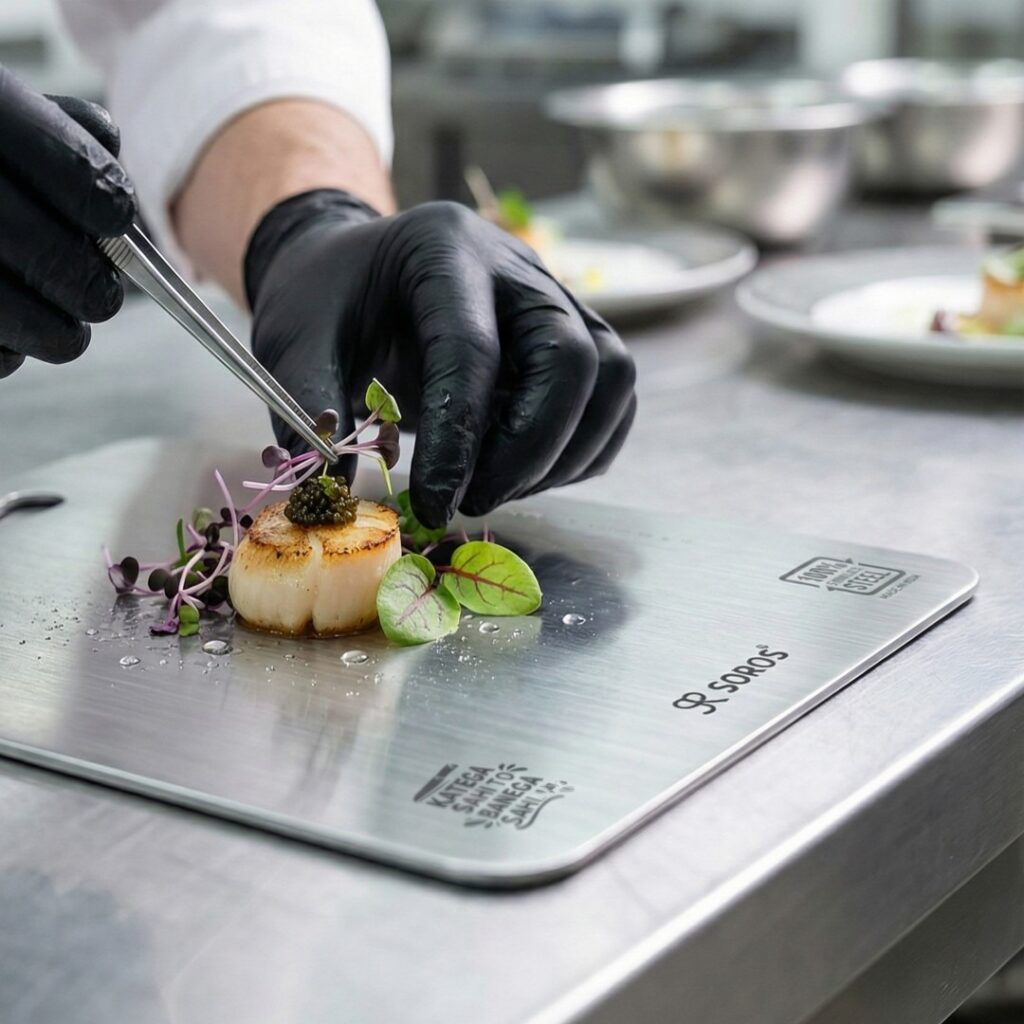
Anyone who has spent time in the kitchen knows that chopping boards are not as simple as they look. Wooden boards demand constant care and can develop mould if moisture lingers. Plastic boards, while convenient, raise concerns around hygiene and microplastics mixing with food over time.
With these issues in mind, stainless steel chopping boards entered the market, promising a hygienic, low-maintenance alternative. After using one regularly for close to a year, here’s an honest take on whether they actually make sense for everyday cooking.